
Rituals here are small and non-negotiable. The day opens with a walk to the end of the street, where the Atlantic conducts its own fitting — grey silk, pinned by gulls, altered hourly. Back upstairs, the window gets the first look at every drawing: if a line survives that much daylight, it earns chalk. The chalk is the promise. Nothing sketched after dark is trusted until the sea has seen it.


By mid-morning the table is a small parliament — cloth on one side, intention on the other. The washed silk we cut this season has strong views and a long memory: fold it carelessly once and it quotes you for a week. Pins go in one argument at a time. When a sleeve finally hangs the way the drawing hoped, nobody says anything. In this room, silence is the applause.
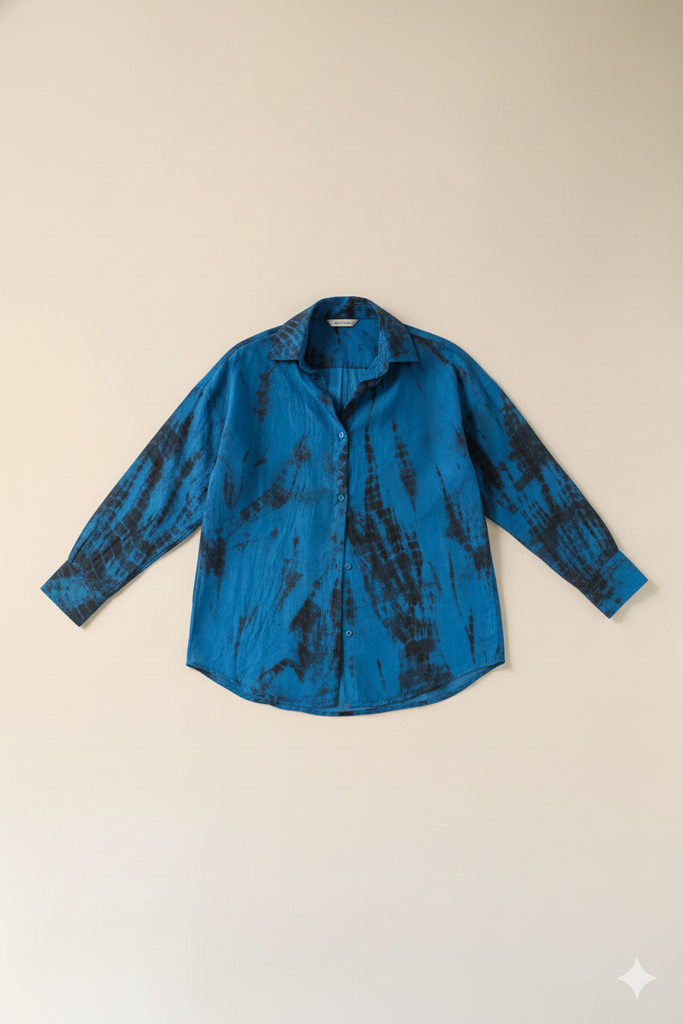 Worn in this dispatch
Jazz Chemise€99.17
On the rail
View the garment
Worn in this dispatch
Jazz Chemise€99.17
On the rail
View the garment

Afternoons belong to the second coffee and the honest mirror. Whatever survived the morning is worn — up the stairs, down the stairs, once around the block if it is brave. The town has seen every prototype we have ever doubted, and its verdict arrives the way weather does, unsigned. We lock the door at eight. The chalk line comes off only when the cloth agrees, and some evenings that is the whole night.